Yves Washington · 16 September 2026
Material Choices That Define Durable Patio Installations Across Varied Climates
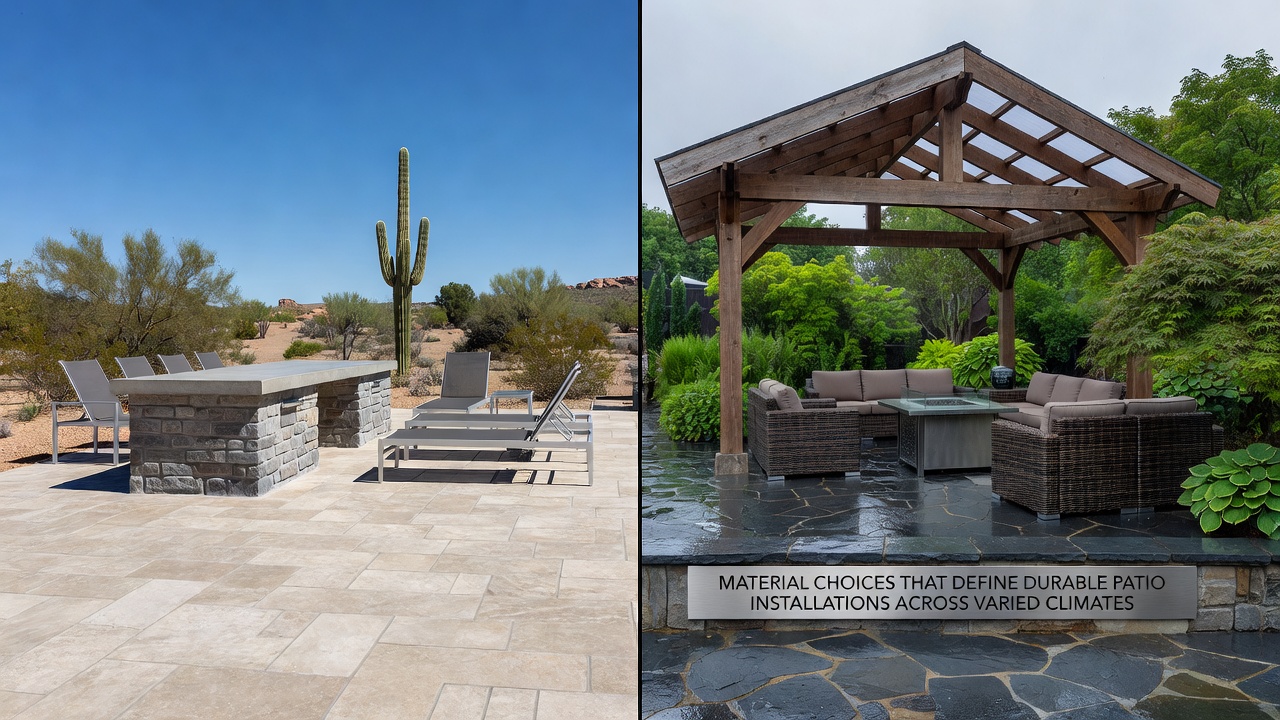
Patio installations rely on material selections that match local temperature swings, precipitation patterns, and soil conditions, and data from regional climate records shows how these choices affect long-term performance. Concrete, natural stone, treated wood, and composite options each respond differently to freeze-thaw cycles in northern latitudes, intense UV exposure in desert regions, and high humidity along coastal zones. Builders examine thermal expansion rates, water absorption levels, and resistance to biological decay before finalizing selections for any project.
Climate Factors That Influence Material Performance
Temperature extremes drive the primary decisions, because materials that expand and contract at mismatched rates develop cracks within a few seasons. Research from institutions tracking North American weather patterns indicates that regions experiencing more than 50 freeze-thaw events annually require products rated for at least 5,000 psi compressive strength. In September 2026 updated climate summaries released by Environment and Climate Change Canada highlighted an increase in such cycles across the Prairie provinces, prompting renewed attention to joint spacing and base preparation techniques.
Moisture management ranks equally high, since standing water accelerates deterioration in porous surfaces while promoting mold growth on organic materials. Coastal areas with salt-laden air demand low-absorption stones or sealed composites that resist chloride penetration, whereas arid zones prioritize UV stabilizers to prevent surface fading and brittleness. Soil movement from expansive clays or permafrost adds another layer, requiring reinforced bases that distribute loads evenly and prevent settling.
Material Options and Regional Applications
Interlocking concrete pavers appear frequently in temperate zones because their modular design accommodates minor ground shifts without widespread failure. Manufacturers formulate these units with air-entraining admixtures that create microscopic voids for water expansion during freezing, a specification confirmed effective in field tests conducted by the National Research Council Canada. Permeable versions further reduce runoff and ice formation by allowing drainage directly through the joints.
Natural stone such as granite and bluestone performs reliably in both hot and cold settings when properly sealed, yet limestone and sandstone show higher absorption rates that limit their use in wet climates. Installers in the Pacific Northwest often select denser igneous stones after observing accelerated weathering on sedimentary varieties exposed to persistent rainfall. Thermal mass properties of stone also moderate surface temperatures, keeping patios cooler under direct sun compared with lighter-colored alternatives.
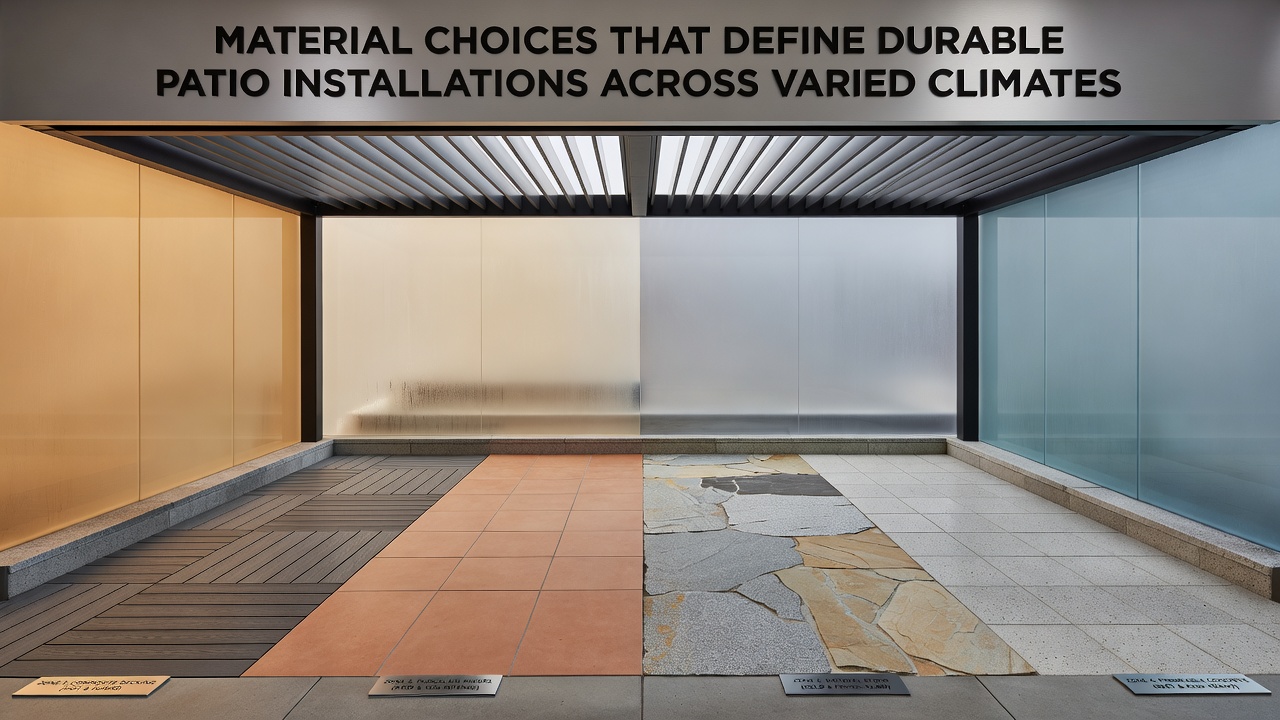
Wood decking, typically pressure-treated pine or cedar, remains popular in moderate climates but requires annual maintenance to counteract checking and rot. In high-humidity subtropical areas, acetylated or thermally modified woods demonstrate improved dimensional stability according to studies from the University of Queensland, which tracked performance over ten-year periods. Composite lumber made from wood fibers and recycled plastics eliminates many maintenance issues while providing consistent color retention across wide temperature ranges, though initial costs run higher than traditional lumber.
Porcelain tiles engineered for exterior use have gained traction in both Mediterranean and tropical settings because of low porosity and slip resistance when textured. These products withstand salt exposure along shorelines and resist staining from organic debris common in humid environments. European manufacturers have refined firing processes to achieve flexural strength ratings above 10,000 psi, enabling thinner profiles that reduce weight on elevated structures.
Installation Practices That Extend Service Life
Base preparation determines whether any surface material achieves its rated durability. A compacted gravel layer at least 150 millimeters deep, topped with a sand or crushed-stone setting bed, provides drainage and load distribution across most soil types. Geotextile fabric placed beneath the base prevents migration of fines that could clog drainage paths over time. Jointing materials range from polymeric sand in freeze-prone regions to permeable aggregates in high-rainfall zones, each chosen to match expected moisture loads.
Expansion joints spaced according to manufacturer guidelines accommodate thermal movement and prevent buckling during heat waves. In desert installations, darker materials reach surface temperatures exceeding 60 degrees Celsius, necessitating lighter colors or reflective sealers to reduce heat buildup. Observers note that proper slope of at least 1 percent directs water away from structures and minimizes pooling that leads to efflorescence or sub-base saturation.
Conclusion
Material performance data compiled across multiple climate zones demonstrates that durability results from matching product specifications to local environmental stresses rather than selecting a single universal solution. Concrete pavers, stone, modified wood, and composites each offer documented advantages when installed with appropriate base systems and joint treatments. Continued monitoring of regional climate records allows designers to adjust specifications as temperature and precipitation patterns evolve, ensuring installations maintain structural integrity and appearance over decades.